
About COP 17
The 17th meeting of the Conference of the Parties (COP17) to the UN Convention on Biological Diversity (CBD) will take place in Yerevan, Armenia from October 19-30, 2026.
Under the theme, “Taking Action for Nature,” COP17 will mark the first global review of collective progress in implementing the Kunming-Montreal Global Biodiversity Framework (KMGBF). This represents a critical moment to assess progress, identify gaps, and strengthen implementation. The global review also highlights persistent challenges countries face in biodiversity monitoring, data availability and reporting.
At COP17, GEO BON will co-convene the Data to Action Pavilion, a dedicated space connecting people and organizations working across the biodiversity knowledge system. The Pavilion will highlight the role of biodiversity observation networks and bring together the different communities, approaches, and tools needed to turn biodiversity data and knowledge into action.
Our aim is to showcase how different organizations, networks and experts can come together to support Parties in implementing and monitoring progress towards the KMGBF.
GEO BON at COP 17
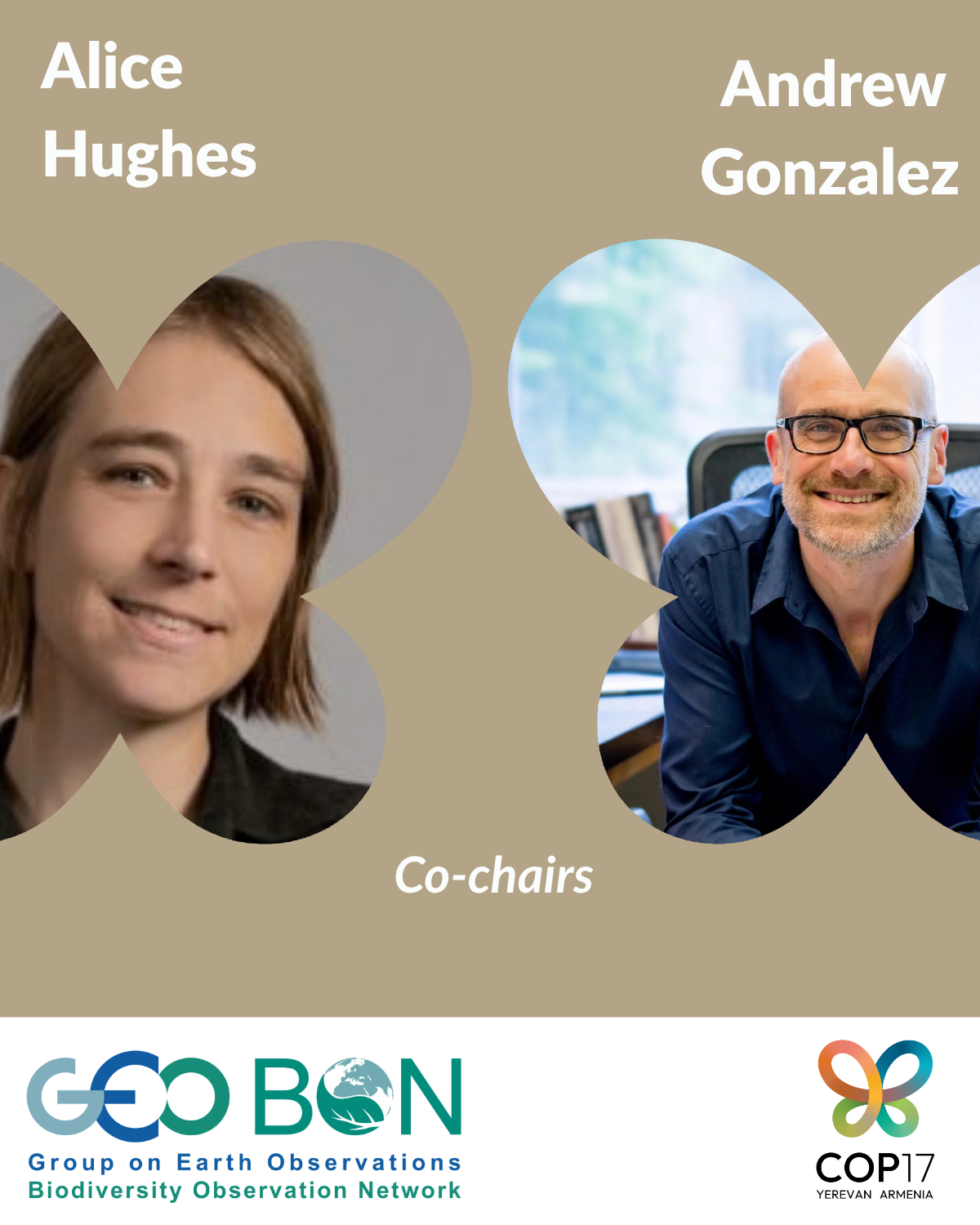
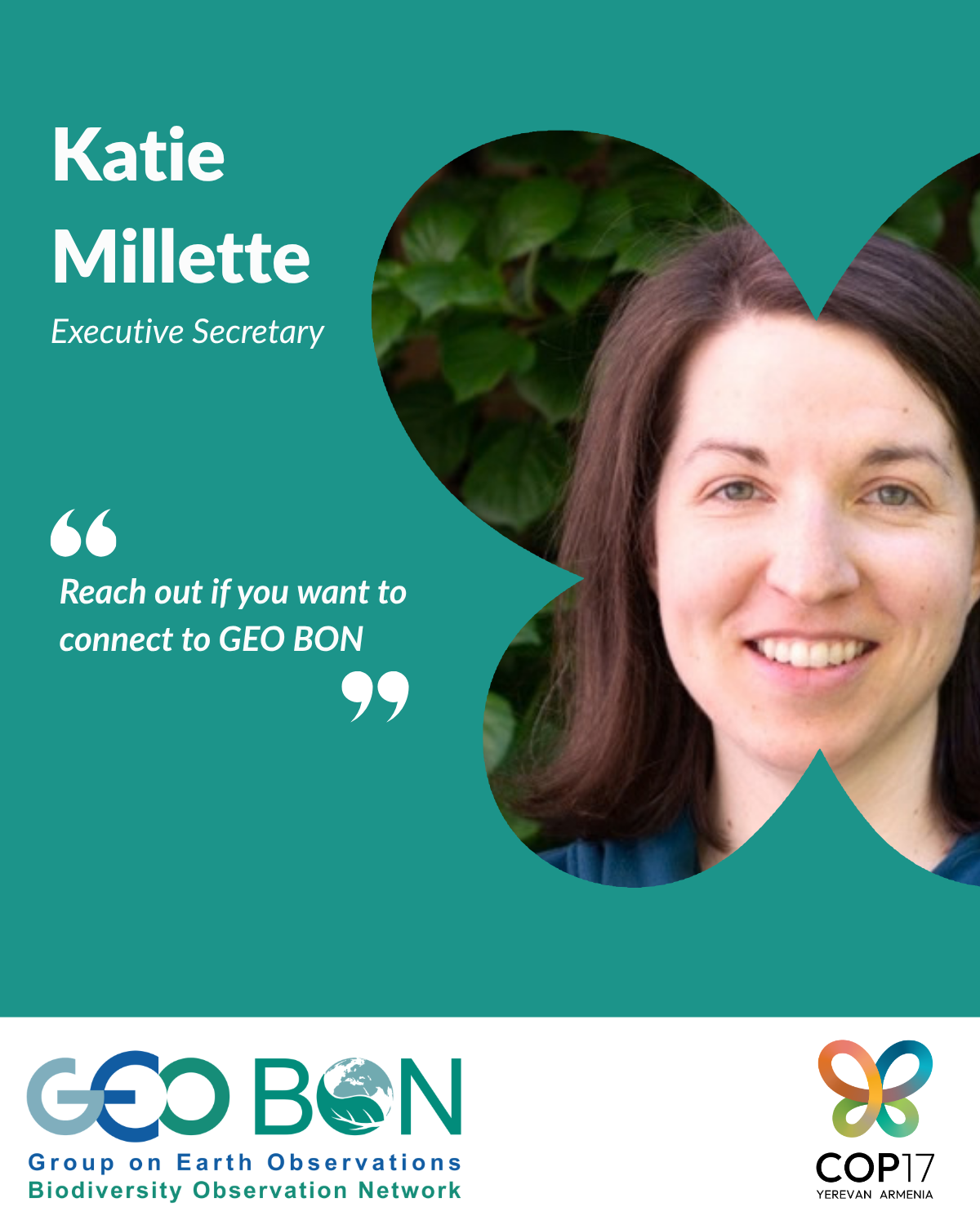
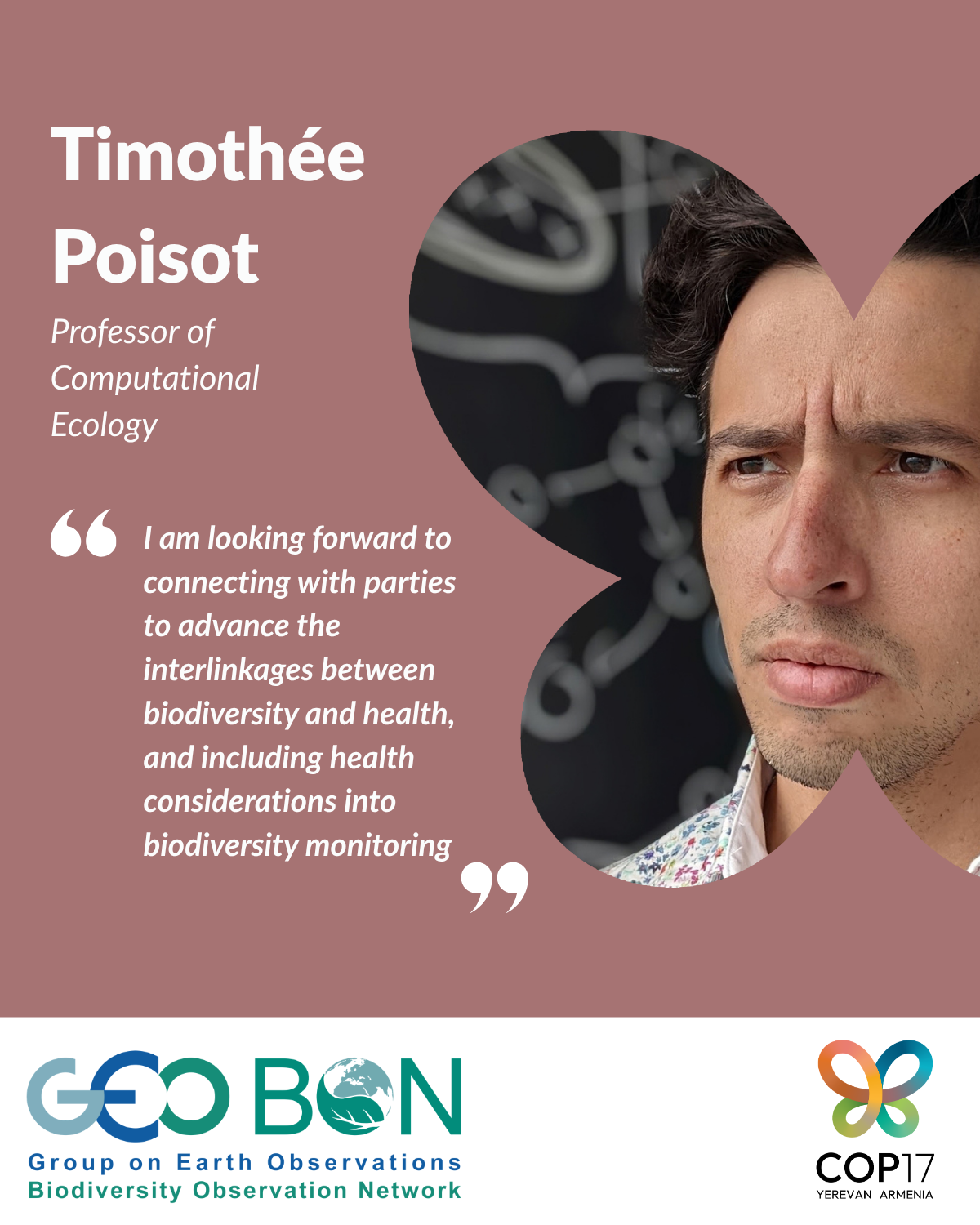
The GEO BON delegation is 13 members and will be alongside delegates from 196 Parties to the CBD and representatives of governments from around the world, international organizations, the scientific community, civil society, Indigenous Peoples and local communities, youth, and the private sector.
The Data to Action Pavilion is a joint initiative convened by GBIF, GEO BON, GEO, the Smithsonian Institution, and the University of Zurich with support from the NOMIS Foundation, and a group of partners, contributors and sponsors. The overarching theme of the pavilion is Connecting Science and Knowledge Systems for Biodiversity, with a focus on meeting the biodiversity monitoring needs of Parties to the Convention on Biological Diversity.
Throughout COP17, the Pavilion will provide a space to connect people and organizations working across the biodiversity knowledge system—from biodiversity observations and monitoring to data infrastructure, knowledge systems, science, technology and innovation, capacity development, decision-support tools and policy.
The pavilion is supported by partners and contributors, including the European Space Agency (ESA), Esri, the Allen Institute for AI (Ai2) and the Quebec Centre for Biodiversity Science (QCBS), with generous financial support from the NOMIS Foundation.
Official SIDE EVENT
Scaling up KM-GBF monitoring: Earth Observation and digital platforms as enablers for NBSAP development, monitoring and reporting
When: October 21st, 2026 – 18:15
Where: Gyumri – Contact Group 6
Putting the Kunming-Montreal Global Biodiversity Framework (KM-GBF) into practice requires long-term technical solutions that translate complex datasets into workflows that countries can actually use for national reporting. This side event explores how advanced satellite Earth Observation (EO) technologies and digital data platforms can directly support countries in streamlining their National Biodiversity Strategies and Action Plans (NBSAP) reporting obligations.
Co-organized by the European Space Agency (ESA), UNEP-WCMC, GEO BON, UNDP, EC, SANBI, OSS, INRAE, IRD and COMIFAC, the session will discuss how data workflows and platforms can harmonize and streamline the calculation of the KM-GBF indicators, including the ones that can be derived from EO. A key focus will be placed on interoperability, ensuring that digital tools and datasets can be seamlessly integrated across different national systems and frameworks, potentially easing the reporting burden of the institutions.
The event features a panel discussion with national representatives alongside institutional experts. Panellists will share firsthand country experiences, institutional challenges, requirements and gaps towards the possible adoption of digital solutions in the context of CBD reporting.
Data to Action Pavilion Events
Led by GEO BON
Next-generation biodiversity analytics: BON in a Box tapping into Earth Observation intelligence
Description
Earth Observation (EO) data holds enormous potential for biodiversity monitoring, but remains difficult to integrate directly into biodiversity workflows or indicator calculations. This session presents a collaboration between the European Space Agency (ESA) and GEO BON that addresses this gap through interoperability rather than duplication of effort.
The session will show how interoperability between ESA’s openEO interface and GEO BON’s BON in a Box combines the strengths of both platforms: cloud-based EO data processing with biodiversity workflows. Through a demonstration, presenters will show how Earth Observation data can be integrated into workflows to enhance biodiversity monitoring and indicator reporting.
Presenters will explore how this complementarity can make EO data more usable for biodiversity monitoring, and how continued ESA–GEO BON collaboration can strengthen the pipeline from raw observations to decision-ready indicators, in support of the Kunming-Montreal Global Biodiversity Framework. Discussion will center on the capacity and skill gaps countries face in putting EO data to practical use, and how this integration, and future ones, can help address these barriers.
Mon, Oct 19, 2026
13:15-14:15
From science to policy: BON in a Box as the open-source platform for your biodiversity monitoring, indicator calculation, and reporting.
Description
Countries are mandated to track their progress toward the Kunming-Montreal Global Biodiversity Framework using indicators that summarize biodiversity trends. Many still face fragmented monitoring efforts, technical barriers, limited access to data and tools, and gaps in capacity. BON in a Box, an open-source GEO BON platform that helps countries build the capacity to calculate their own indicators and strengthen their national reporting.
This session shows how BON in a Box delivers scientifically rigorous and transparent solutions to these reporting challenges. We will present recent progress that has strengthened the robustness of our mission: a choice between an online user space or a local install, updated biodiversity indicator workflows, AI-assisted features that support users through their analyses, ongoing collaborations with Parties, scientists, and other organizations.
Through short presentations and demonstrations, followed by an open discussion, the session will show how we are building lasting national capacity through reproducible workflows that connect data to decisions. We will also highlight where collaboration and investment will expand this work
Wed, Oct 21, 2026
15:00-16:00
Building the Global Biodiversity Observing System: GEO BON’s global biodiversity network
Description
Four years into implementation of the Kunming-Montreal Global Biodiversity Framework, countries need biodiversity monitoring systems that can turn observations into information for indicators, reporting and decision-making. GEO BON is working with its global network of national, regional and thematic Biodiversity Observation Networks (BONs), Essential Biodiversity Variable (EBV) communities, partners and technical initiatives to help build this capacity.
This session will provide an update on how GEO BON is translating the vision of a Global Biodiversity Observing System (GBiOS) into practical action. It will highlight progress across the network, including the development and strengthening of BONs; advances in EBVs and indicators; BON in a Box and reproducible data-to-decision workflows; emerging areas such as animal movement and One Health; and partnerships connecting Earth observation, biodiversity data, technology and national monitoring.
We look ahead to the next phase of implementation: how these pieces can work together as a more connected global observing system that strengthens national biodiversity monitoring while contributing to regional and global understanding of biodiversity change.
Through short presentations and discussion with GEO BON members and partners, the session will explore what is already working, where important gaps remain, and where collaboration and investment can accelerate the transition from biodiversity observations to sustained monitoring and action.
Tues, Oct 27, 2026
14:00-15:00
Connecting networks, data and decisions through a GBIF-GEO BON partnership
Description
How can stronger connections between biodiversity data infrastructure and observation networks support action for nature? Join GEO BON and the Global Biodiversity Information Facility (GBIF) at the Data to Action Pavilion to explore their complementary roles and celebrate the signing of a Memorandum of Cooperation.
GBIF’s global network of nodes and publishers mobilizes and shares biodiversity data through common standards and open infrastructure. GEO BON advances coordinated biodiversity observations, the Essential Biodiversity Variables framework, and tools to support monitoring and indicator development. Together, the networks can strengthen the connections between data availability, scientific analysis and policy needs.
The event will feature introductions to both networks and perspectives from GBIF nodes and Biodiversity Observation Networks on opportunities for collaboration. A practical BON in a Box demonstration will illustrate how mobilized biodiversity data can support analysis and monitoring, and how a new approach allows querying cloud-optimized biodiversity data structured through the Darwin Core Data Package.
The session will conclude with the MOC signing and a discussion of future joint activities, including capacity development, identifying and addressing data gaps, and supporting implementation of the Kunming–Montreal Global Biodiversity Framework. Researchers, data holders, practitioners and policymakers are invited to discover opportunities to participate.
Wed, Oct 28, 2026
13:15-14:45
Indicator T6.1 on Invasive Alien Species
Description
How can countries use biodiversity data to track progress in preventing biological invasions? This event introduces Headline Indicator 6.1, the rate of invasive alien species establishment, and its role in monitoring Target 6 of the Kunming-Montreal Global Biodiversity Framework. The session will explain the indicator’s methodology and the data needed to calculate it: national checklists of invasive alien species, information on when species established, and estimates of survey effort over time. It will explore how national information can complement open resources, including the Global Register of Introduced and Invasive Species, the First Records database and species occurrence data available through GBIF. Drawing on country examples, the session will examine how to interpret establishment trends, assess data completeness and understand what the results mean for progress towards Target 6. Participants will also learn about a calculation pipeline under development to help countries use their own data alongside open sources. The discussion will highlight opportunities to strengthen national monitoring and data sharing to support prevention, management and reporting.
Wed, Oct 28, 2026
16:45-17:45
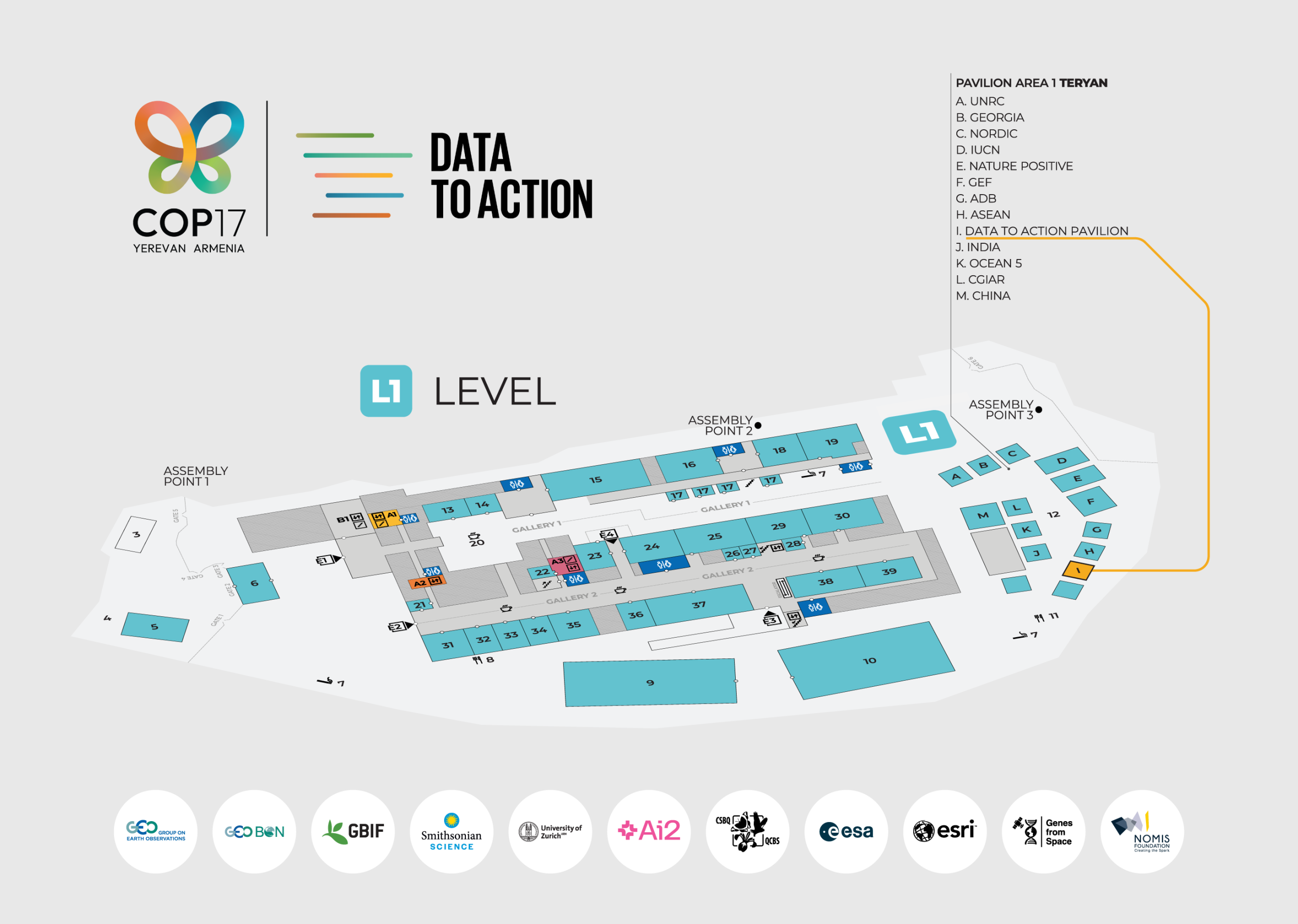
Where to find us
Data to Action Pavilion, Blue Zone, COP17
Other events held by GEO BON members
Ocean Biodiversity to Action: Connecting Data, Monitoring, and Decisions
Led by the Smithsonian Institution
Tue, 20 Oct 2026
18:15-19:45
Data to Action Pavilion, Blue Zone
Using Biodiversity Data and the Mitigation Hierarchy to Inform Conservation and Development Decisions
Led by the Smithsonian Institution
Wed, 21 Oct 2026
13:30-14:30
Data to Action Pavilion, Blue Zone
From data to reporting to action: implementing the genetic diversity indicators of the KMGBF
Led by the Royal Botanic Gardens, Kew
Thu, 22 Oct 2026
12:00-13:00
Living data for action and equity
Led by the University of Zurich
Fri, 23 Oct 2026
12:00-13:00
Toward a World Biodiversity Research Programme: strengthening global scientific coordination to support implementation of the Kunming-Montreal Global Biodiversity Framework
Led by the Natural History Museum, London
Fri, 23 Oct 2026
13:30-14:20
From data to reporting to action: how Galaxy Ecology initiative allows to design a sustainable model to manage and boost indicator production from local to global
Led by the MNHN, UAR 2047, DoHNÉE, PNDB, Data Terra
Sat, 24 Oct 2026
13:30-14:20
Stay connected
We will be keeping this page updated and will be giving updates throughout COP17 on our LinkedIn