
Recording: HERE
When: FEBRUARY 26th 2026
Time: 12:00 PM CET (6:00 AM EST)
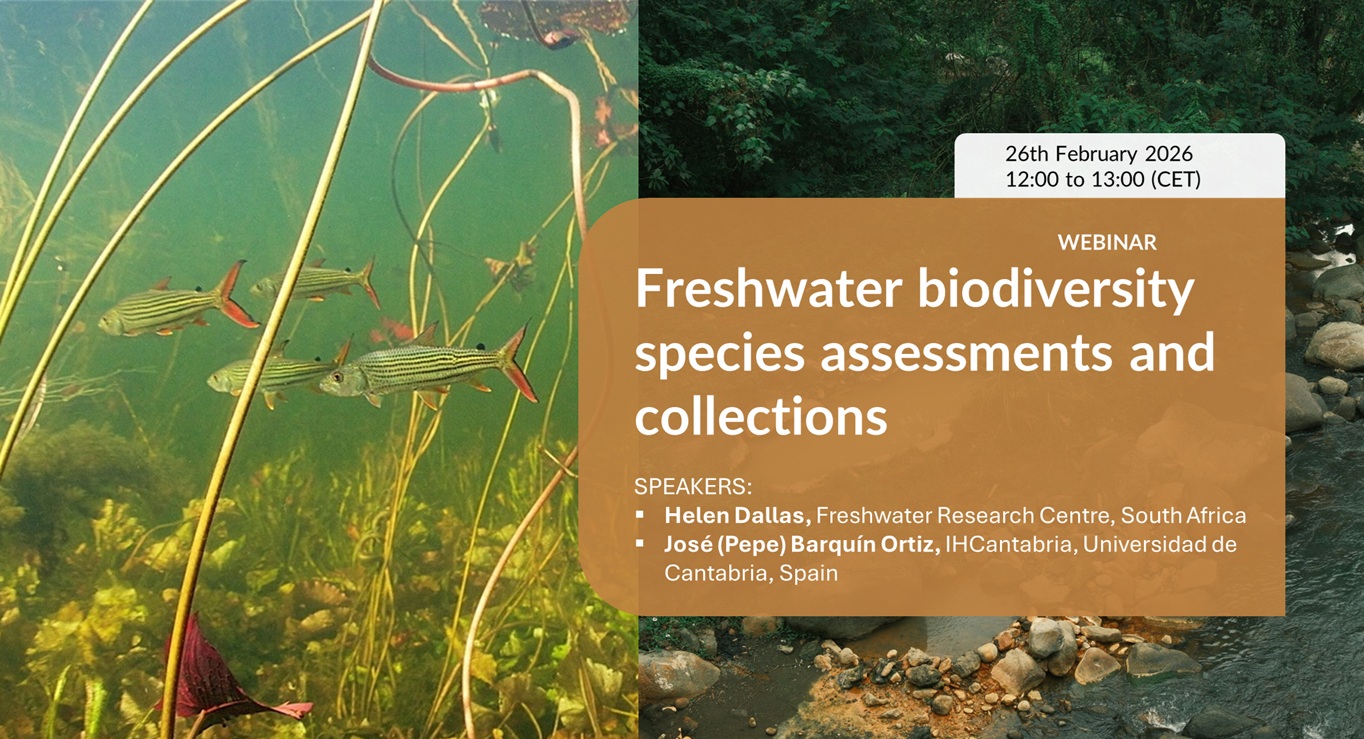
This Freshwater BON webinar focuses on understanding biodiversity patterns in freshwater systems and strengthening data-driven conservation across Africa. The webinar highlights how integrating biotic and abiotic data, harmonising sampling protocols, and mobilising both historic and recent datasets are essential for assessing freshwater invertebrate diversity from regional to continental scales.
Through two expert presentations, participants will explore regional and global patterns of freshwater invertebrates and learn about FBIS-Africa (https://fbisafrica.org), an open-access freshwater biodiversity information system that enables the sharing, analysis and application of over 600,000 occurrence records. Together, the talks address key challenges and solutions in translating freshwater biodiversity data into informed monitoring, management and conservation actions.
Agenda
| Time (CET) | Item |
|---|---|
| 12:00 | Welcome and introductions |
| 12:10 | FBIS-Africa: A Freshwater Biodiversity Information System for Africa, by Helen Dallas |
| 12:25 | Regional and global biodiversity patterns on freshwater spring invertebrates, by José (Pepe) Barquín Ortiz |
| 12:40 | Q&A and discussion |
| 12:55 | Wrap-up |
Speakers
Dr. Helen Dallas – Freshwater Research Centre (FRC), Cape Town, South Africa

Helen is the Executive Director and a Researcher at the Freshwater Research Centre in Cape Town, South Africa. She has led many collaborative projects on the ecology, biodiversity, conservation and management of freshwater ecosystems. Her work focuses on river health, climate change and bioinformatics. The FBIS-Africa project is one of several bioinformatic projects she leads.
Dr. José (Pepe) Barquín Ortiz – IHCantabria, Universidad de Cantabria, Spain

Pepe Barquín Ortiz is a professor at the University of Cantabria and the head of the Continental Ecosystems team at the Institute of Environmental Hydraulics of the University of Cantabria (2008-present). His research activity has focused on disciplines such as environmental hydraulics, eco-hydrology, environmental assessment and freshwater ecology. This activity has focused on the production of basic knowledge on biophysical interrelationships between terrestrial and aquatic ecosystems and on the development of methodologies and tools that make possible the transfer of knowledge from scientific advances to the most common practices in water resource management.