
To attend: REGISTER HERE
When: 28 July 2026
Time: 13:00 CEST
Freshwater systems have long been shaped by spiritual values, cultural practices, and sustained human stewardship. This webinar brings together perspectives from Laos and India to explore how ancient and sacred freshwater systems function as living laboratories for understanding resilience, biodiversity conservation, and climate adaptation.
This webinar will not be recorded.
Agenda
| Time (EST) | Item |
|---|---|
| 13:00 | Welcome |
| 13:05 | The world’s oldest man-made biological experiment, by Laura Käse |
| 13:30 | Sacred aquatic sites in South India: cultural values, biodiversity, and conservation challenges, by Sundar Shunmuga Velayutham |
| 13:40 | Discussion: Bridging cultural heritage, ecological integrity, and freshwater monitoring in a changing climate |
Speakers
Dr. Laura Käse
Department of Biology, Section for Freshwater Biology
University of Copenhagen, Denmark
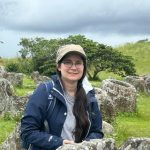
Dr. Laura Käse is a postdoctoral researcher at the freshwater biology section at the University of Copenhagen (Denmark). Her research centers on the use of environmental DNA (eDNA) and metabarcoding to investigate plankton diversity, microbial community dynamics, and trophic interactions in aquatic ecosystems. Previously, she has contributed to studies on phytoplankton responses to climate change and the structure of marine planktonic food webs, applying bioinformatics and high throughput sequencing to long-term ecological datasets in the North Sea while working at the Biologische Anstalt Helgoland which is part of the Alfred Wegener Institute, Helmholtz Centre for Polar and Marine Research, Germany. Her work aims to improve understanding of biodiversity patterns and ecosystem functioning under environmental change.
Dr. S. Sundar Shunmuga Velayutham
Division of Ecology and Environmental Sciences
S.S. Research Foundation, Tamil Nadu

Dr. Sundar is an ecologist with more than two decades of experience in freshwater biodiversity, aquatic insects, and conservation policy. He has been actively involved in national and international collaborations that advance ecological research and conservation practice. His work has established aquatic macroinvertebrates as vital bioindicators and informed strategies for protecting forests, wetlands, and significant aquatic landscapes.
Host: Dr. Heidi van Deventer
Council for Scientific and Industrial Research, South Africa
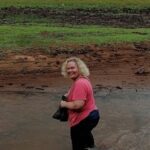
Dr. Heidi van Deventer is a principal researcher at the Council for Scientific and Industrial Research (CSIR) in South Africa, who, as a geoinformation scientist, focuses on the improved representativeness and monitoring of estuarine and freshwater ecosystem biodiversity and ecological condition. She is one of the regional coordinators of the Freshwater Biodiversity Observation Network (FWBON), and also an Extraordinary Research Associate to the University of Pretoria’s (UP) Department of Geography, Geoinformatics and Meteorology.